By Admin · 08 Sep 2026
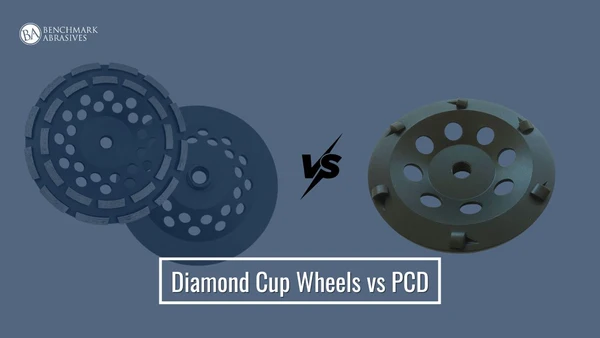
When you're faced with a tough concrete job, whether it’s prepping a floor for a new finish or stripping a stubborn epoxy coating, choosing the right diamond tools is crucial. The debate between diamond cup wheels vs PCD is one that professionals constantly face.
While both are powerful abrasives, they are designed for very different grinding applications. For general purposes, using the wrong one can lead to wasted time, a poor finish, and a shorter tool life.
This guide will walk you through the key differences between diamond cup wheels and PCD, helping you select the best tool for concrete grinding and coating removal, ultimately ensuring a more efficient job with a better finish.
The specific work you're doing on concrete may determine whether a diamond cup wheel or a PCD grinding wheel is the best option for you.
These are the workhorses of concrete grinding. A diamond cup wheel is best for stock removal on concrete surfaces, leveling out rough surfaces, and floor grinding down high spots. With their aggressive diamond segments, they are highly efficient at removing old material and shaping the surface. They can be used on floor grinders for large surface areas or handheld grinders to grind concrete on smaller spots with an angle grinder.
PCD stands for Polycrystalline Diamond. Unlike traditional diamond cup wheels, which grind, PCD wheels are designed to fracture and peel coatings off the surface. A PCD grinding wheel is the ideal tool for removing surface coatings, especially when dealing with tough coatings such as epoxy, glues, and thin overlays.
They are much more durable and heavy-duty than a standard cup wheel when removing soft coatings, which can otherwise gum up a standard diamond wheel.
A T-segment cup wheel is a specialized tool among various types of diamond cup wheels, featuring specially designed diamond segments. These are excellent for controlled grinding, making them the best choice for edges, corners, and finishing work. They are a great middle-ground, balancing speed and surface quality, and they are specifically designed to minimize chatter marks for a smoother finish.
The effectiveness of a diamond cup wheel depends on two key factors: the grit size of the diamonds and the wheel's segment pattern. These elements directly impact how aggressive the wheel is, the speed of material removal, and the smoothness of the final finish.
The spacing and shape of the segments directly influence the stock removal rate and the final surface finish of the concrete.
 Star Materials & Mind